
Underlayment Replacement Methods for Tile Roofs
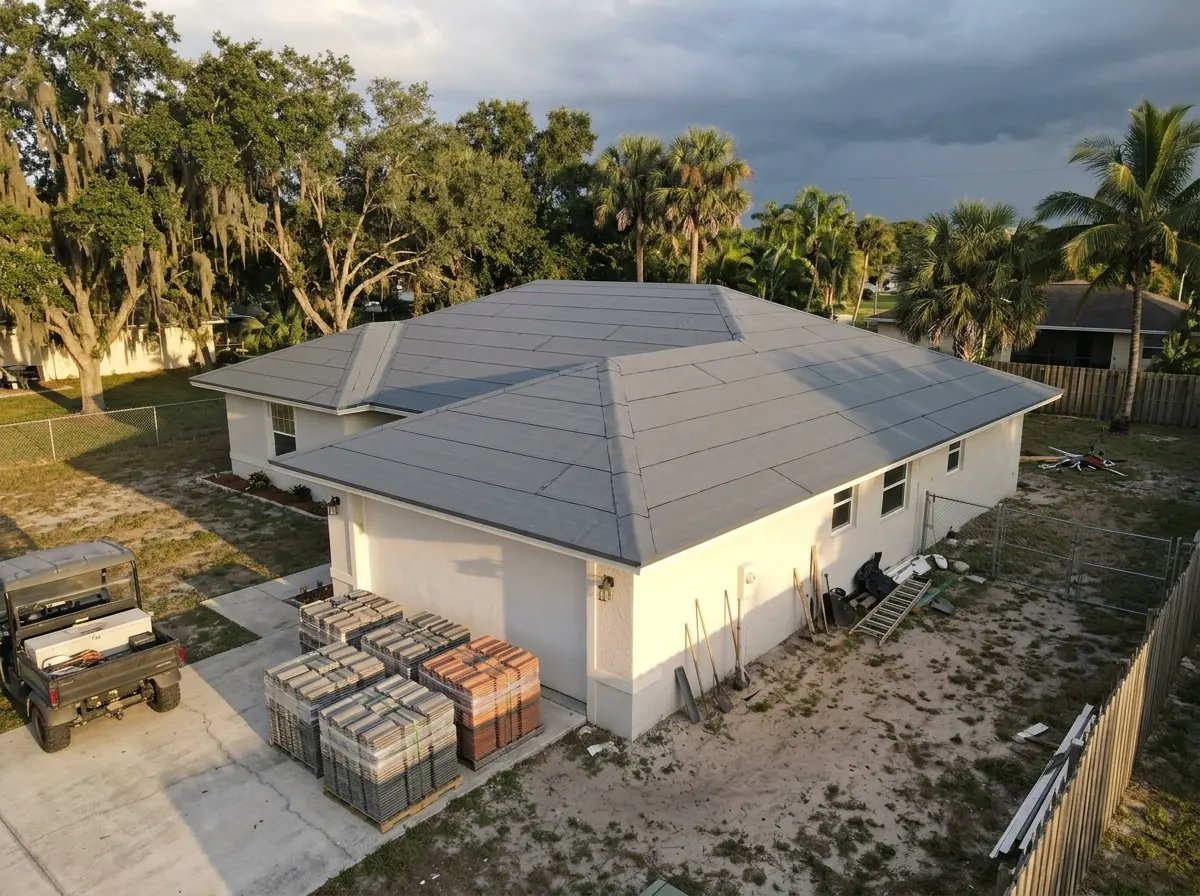
Lift-and-Relay (Reusing the Tile)
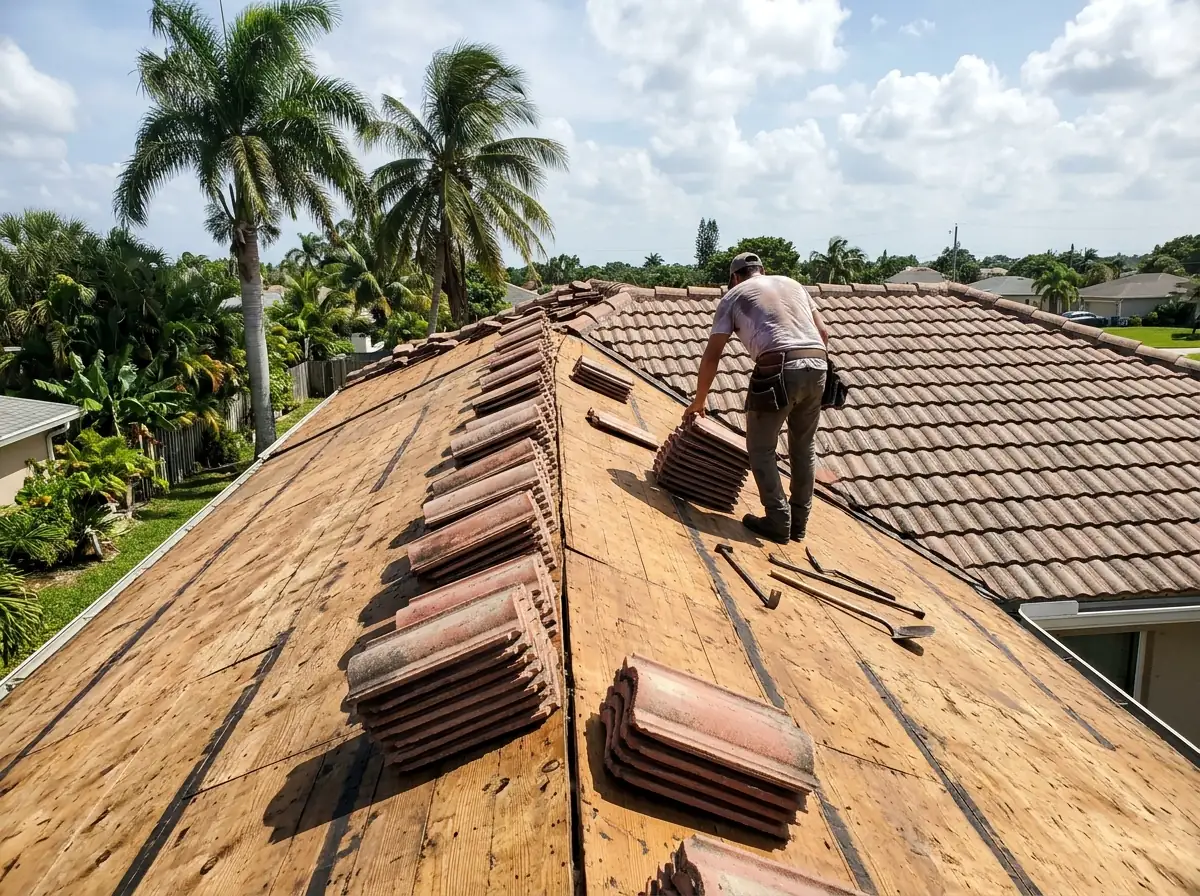
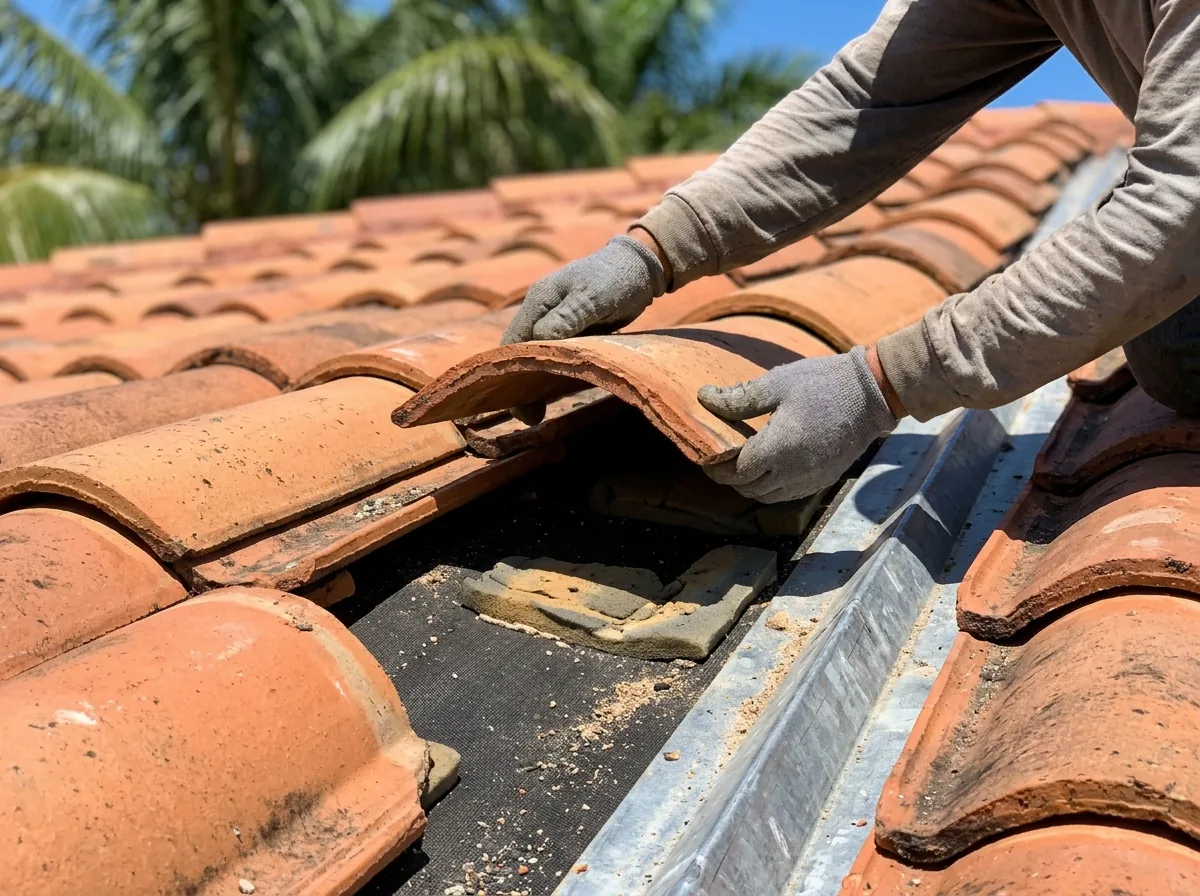
HomeGuide notes that some roofers call underlayment replacement a "lift and relay": remove the tiles, replace the underlayment, then lay the original tiles back. Points to settle up front:
- How broken tile will be replaced and who supplies matching pieces.
- What happens to any soft decking found once the felt is off; Broward's code requires tile to go over solid sheathed decks (FBC 1518.8.1), and the roof deck replacement page covers that work.
- Whether the permit treats the job as a re-roof. If it does, F.S. 553.844 brings in the secondary-water-barrier and deck-attachment upgrades described on the roof replacement page.
Self-Adhered (Peel-and-Stick) Underlayment
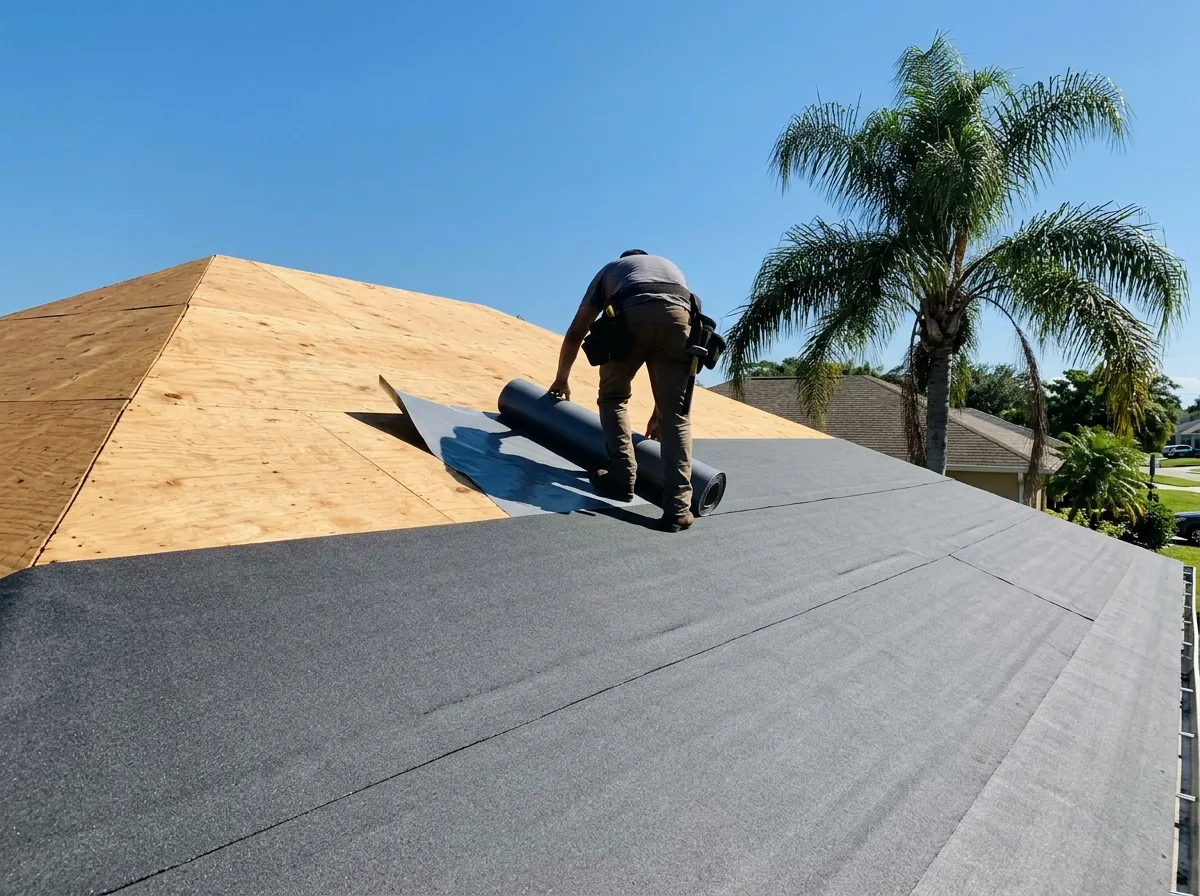
Synthetic and rubberized sheets often come with a peel-and-stick backing. HomeGuide says that costs more than nailed felt but is more weatherproof, and rubberized (SBS) material runs $0.20 to $0.90 per sq ft before labor. Davie's roofing checklist makes the peel-and-stick inspection a separate step: it is scheduled a day ahead and must be done before tiles are loaded on the roof.
Fastened Base Sheet with Cap Sheet
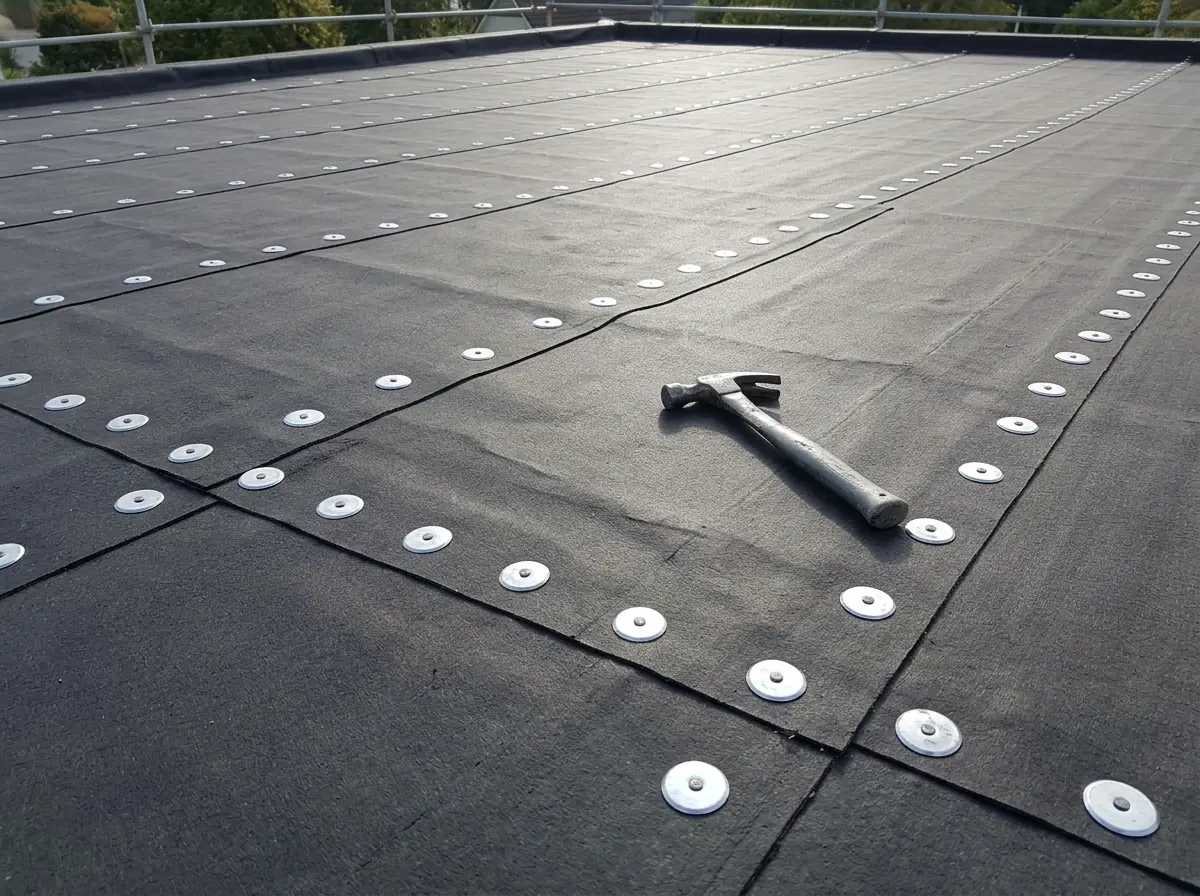
In this method a base sheet is nailed to the deck through tin caps, and a cap sheet goes on over it. The Davie checklist says the tin-cap inspection must be approved before any peel-and-stick is installed. Under the hurricane-zone code:
- Tin caps must be 1-5/8 to 2 inches across and at least 32-gauge metal (FBC 1517.5.2).
- Nails must be at least 12-gauge annular ring shank with 20 or more rings per inch (FBC 1517.5.1).
- An inspection is due during or after the base sheet, anchor sheet or underlayment goes on (FBC 1512.4.2.1).
The exact layers, laps and fasteners come from the tile system's product approval, so ask for that document with the quote.
Secondary Water Barrier Options
A secondary water barrier seals the roof deck itself, underneath the roof covering. Two sourced paths count:
- Full peel-and-stick: a self-adhering membrane across the entire deck.
- Taped seams: tape over the deck joints, with felt or a similar nailed underlayment on top. Insurance Journal reports that the Florida code and the My Safe Florida Home program accept either one.
On the state's wind mitigation form, the Sealed Roof Deck / Secondary Water Resistance item excludes standard underlayment and hot-mopped felt. The Florida Existing Building Code treats clay and concrete tile systems installed to the current code as meeting its own secondary-barrier rule (FBCEB 706.7.2). Grants that help pay for this layer are explained on the My Safe Florida Home roof upgrades page.
Why Davie homeowners, HOAs and property managers call Davie Roofline
- One request goes to one independent roofer, not a list of five
- Ask for an inspection and a written scope before any deposit
- Ask to see the product approval (NOA) number for every material quoted
- Ask the roofer to name who pulls the Town of Davie permit
- Hold the final payment until Davie's final inspection passes
Signs the Underlayment Is Worn Out
Tile usually outlasts what's under it. HomeGuide lists brittle, curling or shrinking underlayment as a sign it will soon need replacing, and suggests a tile roof inspection every 3 to 5 years. One or two cracked tiles are a tile roof repair instead.
What the Price Covers on a 2,000 sq ft Roof
HomeGuide's table puts underlayment replacement on a 2,000 sq ft roof at $1,500 to $8,000. Inside that range:
Labor
$0.65 to $3.20 per sq ft, most of the bill.Material
$0.10 to $0.35 per sq ft for synthetic, $0.20 to $0.90 for rubberized.Decking
$2 to $5 per sq ft for any plywood that has to come out.Permit
$150 to $500 for a replacement permit in HomeGuide's range; Davie's own steps are on the roof replacement page.