
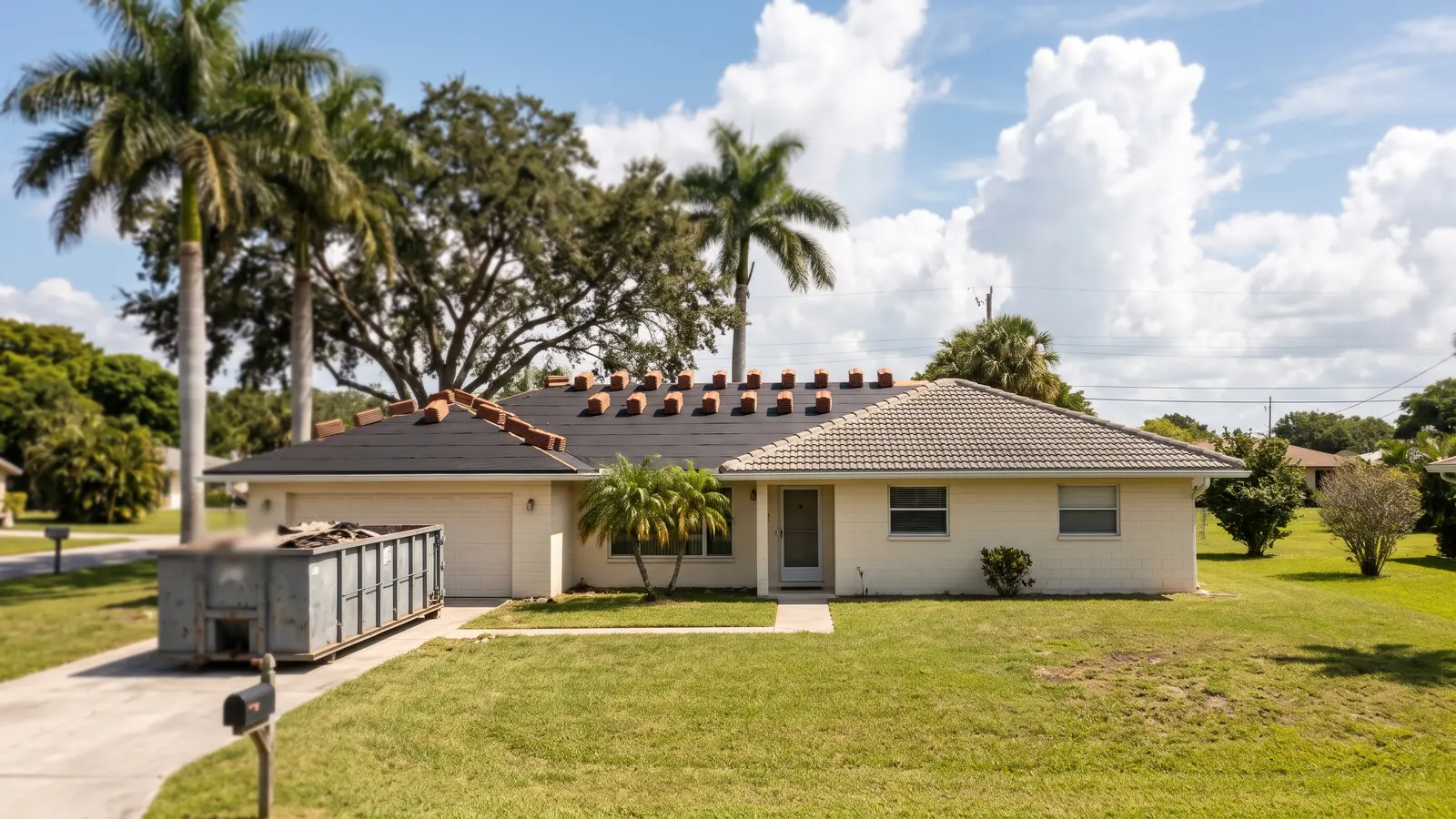
Storm Damage Roof Repair by Roof Type
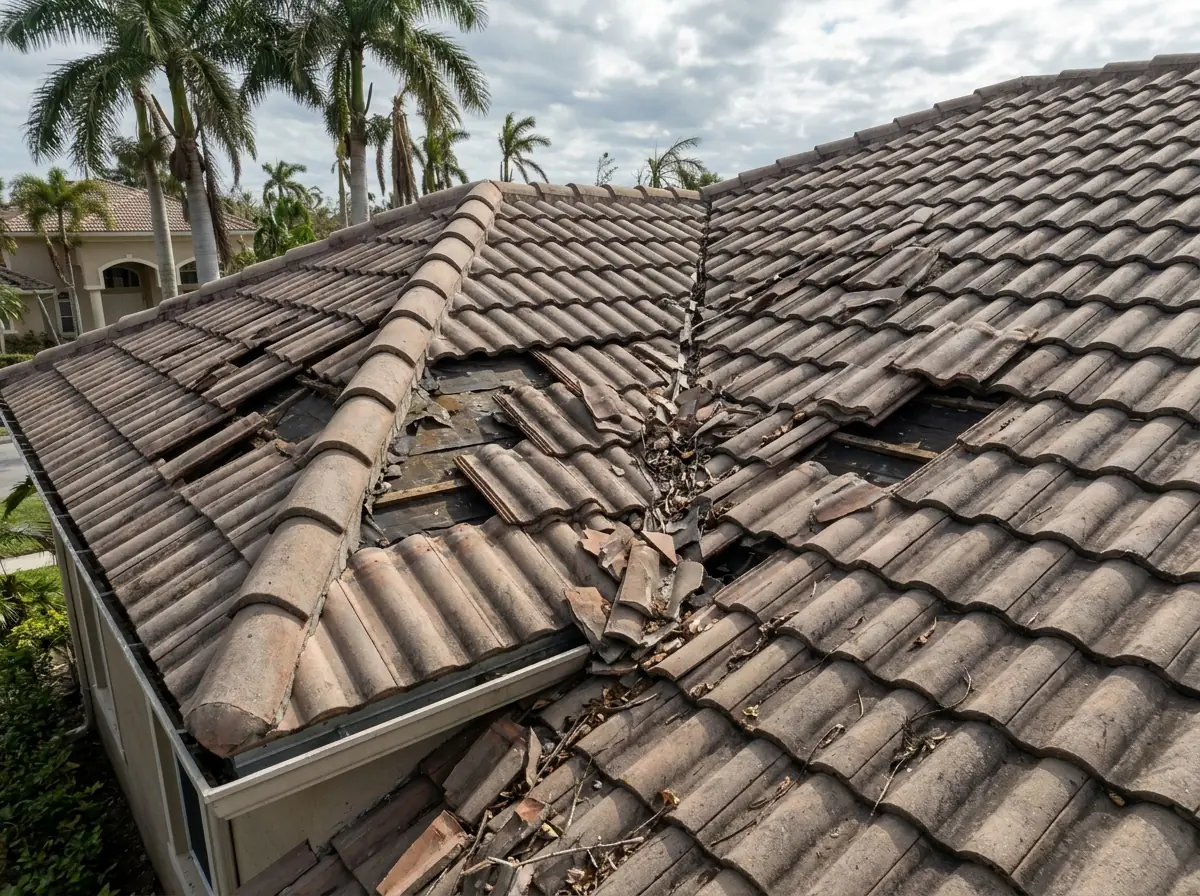
Blown-Off or Cracked Tile
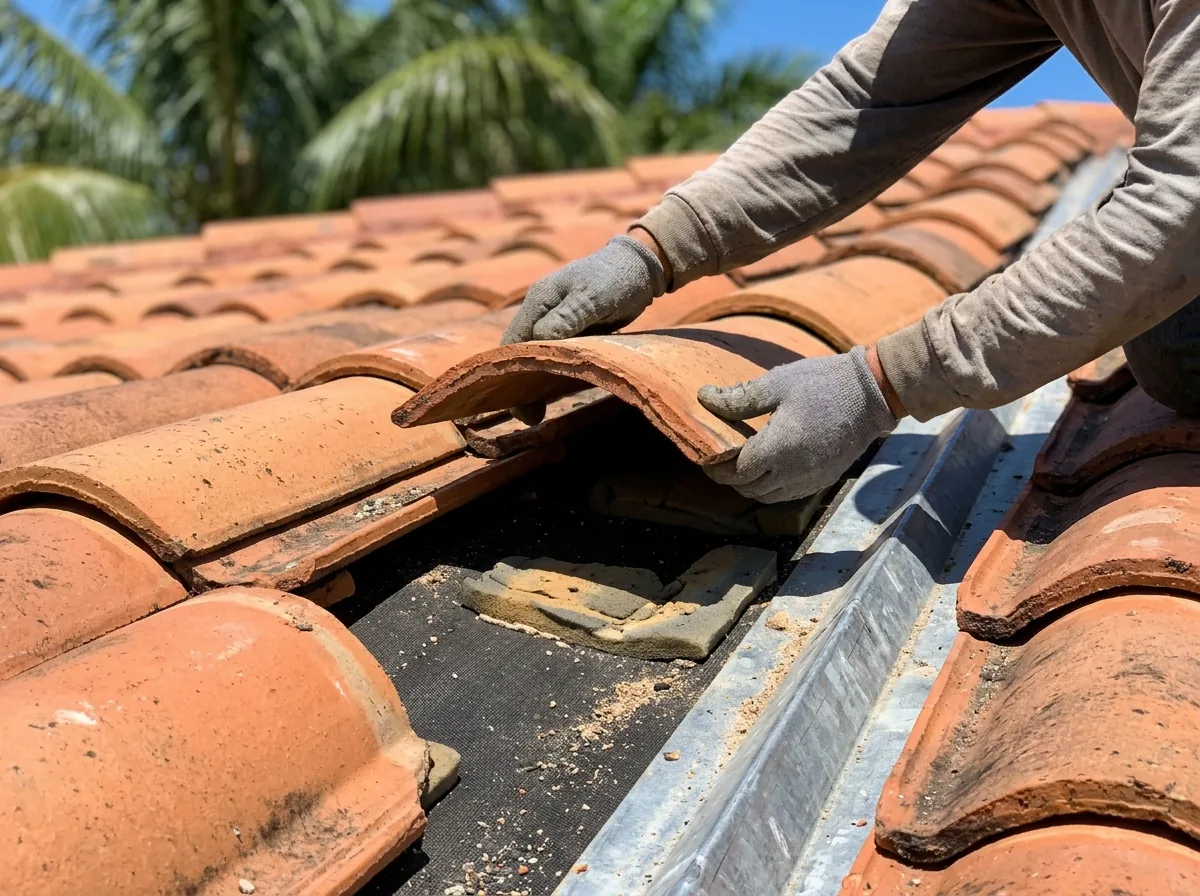
Wind and flying debris crack, loosen and strip tiles, and every gap leaves the underlayment exposed to sun and rain.
- Broken or missing tile: $60 to $125 per tile in HomeGuide's tile repair guide
- Slipped or loose tile: $300 to $750
- Tile leak repair: $200 to $900
Matching an older concrete or clay tile can be the hard part. Ask whether the roofer has a source for your profile and color, and how they'll handle the mismatch if not. The detail work is on our tile roof repair page.
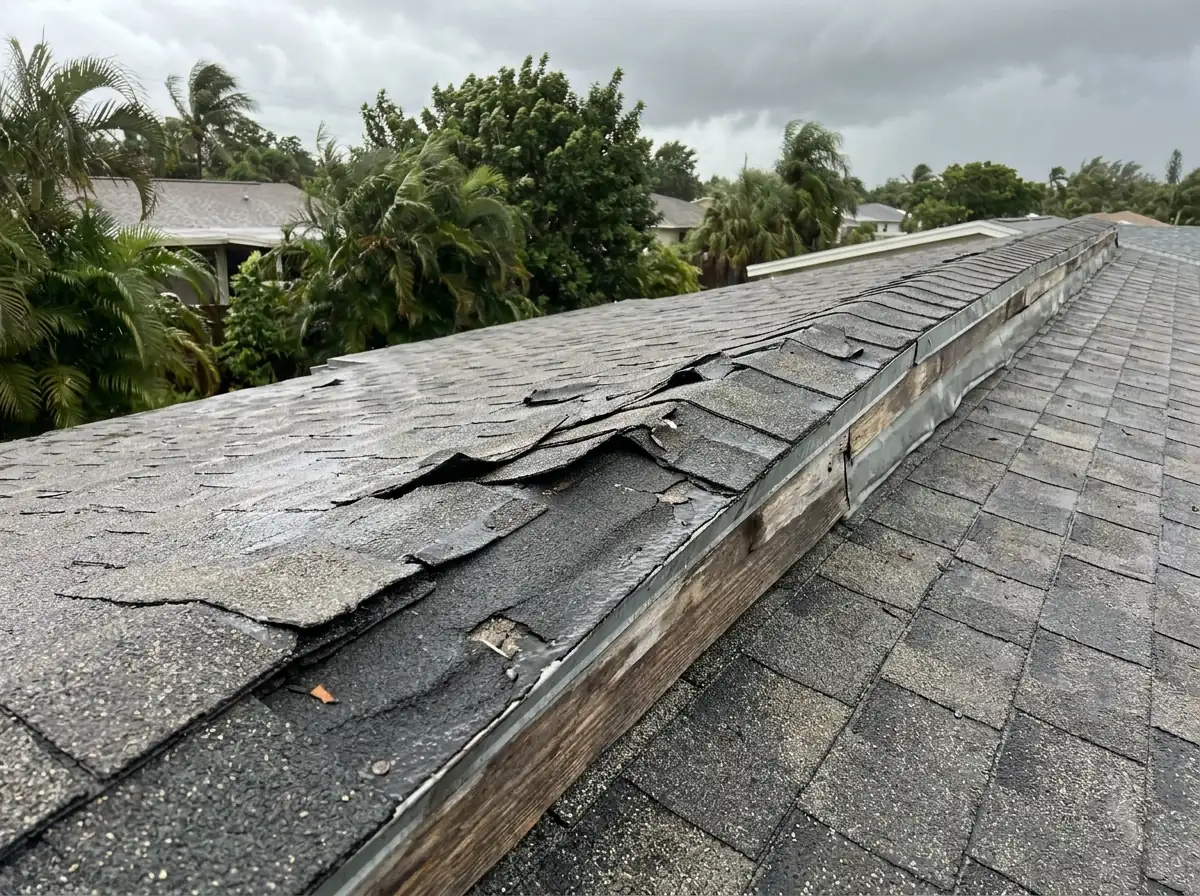
Lifted and Torn Shingles
Wind can lift, crease or tear shingles, or strip them off entirely. Ask the roofer to walk the slopes that faced the wind, not just count the pieces in the yard.
- Up to 25 replacement shingles: $100 to $300
- A whole section, per square (100 sq ft): $350 to $1,000
Patching works when the damage is spread thin. When a slope has lost many shingles, ask how much of the roof is involved: Florida's 25% rule for repairs, explained on our roof repair page, can turn a patch into a re-roof of that section.
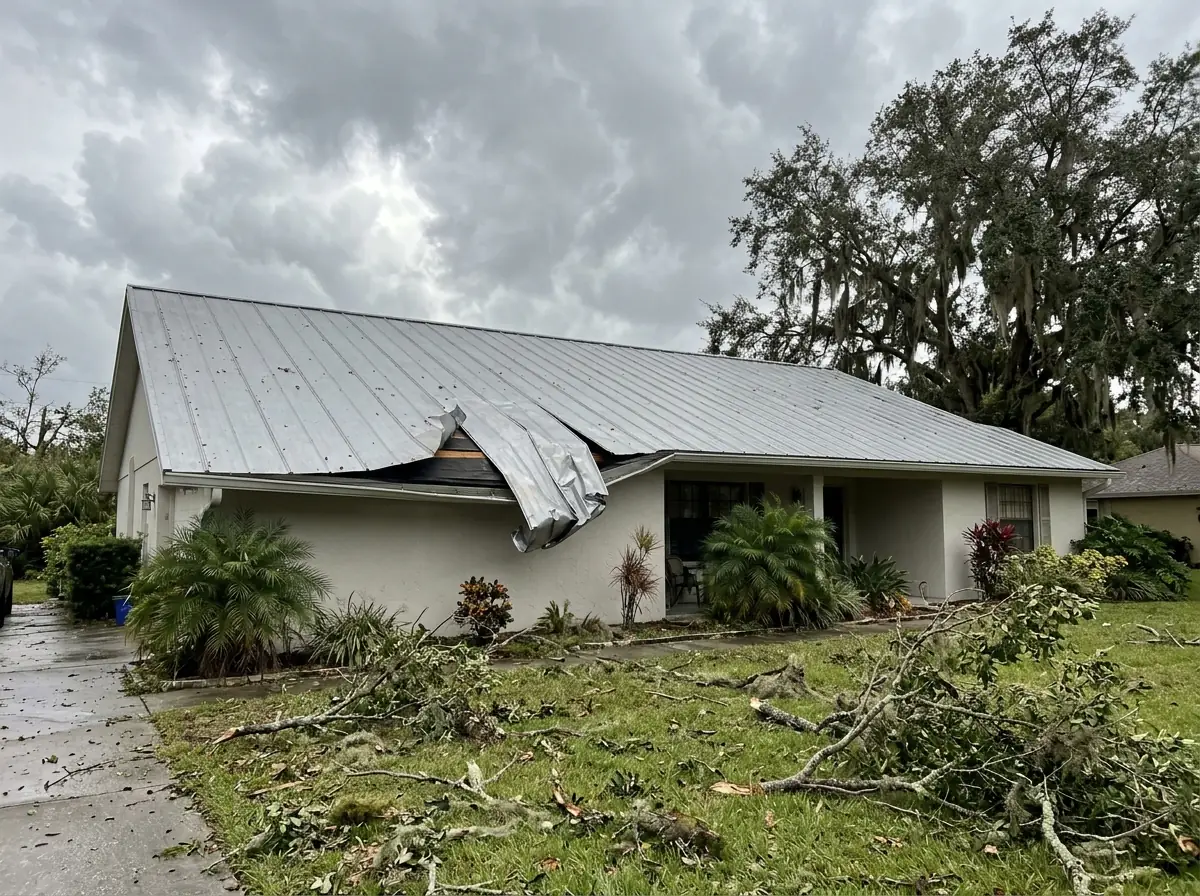
Bent or Peeled Metal Panels
Wind can lift a metal panel at the eave or rake and bend or peel it back. HomeGuide puts metal roof leak repair at $5 to $15 per square foot. Ask whether a bent panel can be refastened or has to be replaced, and whether new panels will match the original gauge and finish.
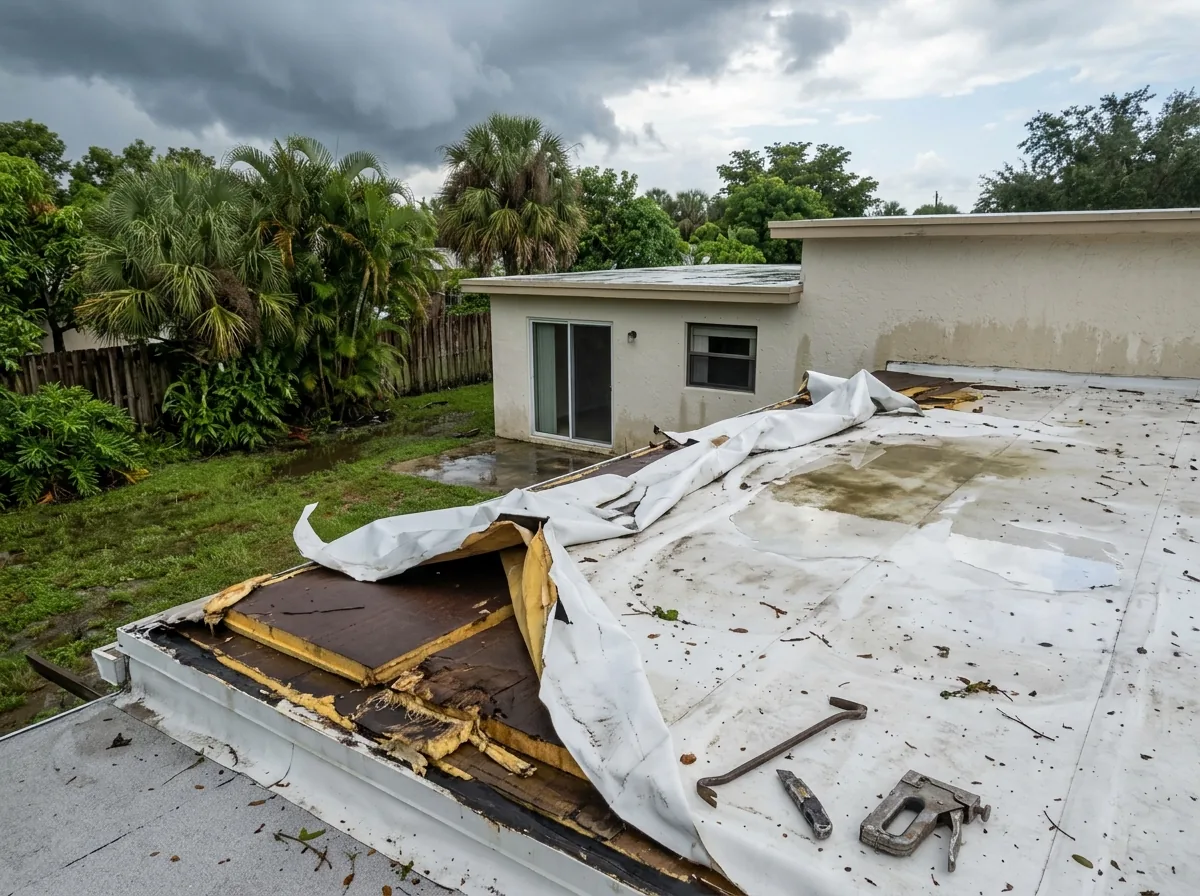
Flat Roof Membrane Blow-Off
Low-slope sections over additions, carports and Florida rooms can lose membrane when wind gets under a loose edge, and rain then runs under the rest. HomeGuide's flat roof guide puts repairs at $2.50 to $10.00 per square foot, or $300 to $1,100 on average. A membrane that has peeled across most of the section is usually a replacement, covered on our flat roofing page.
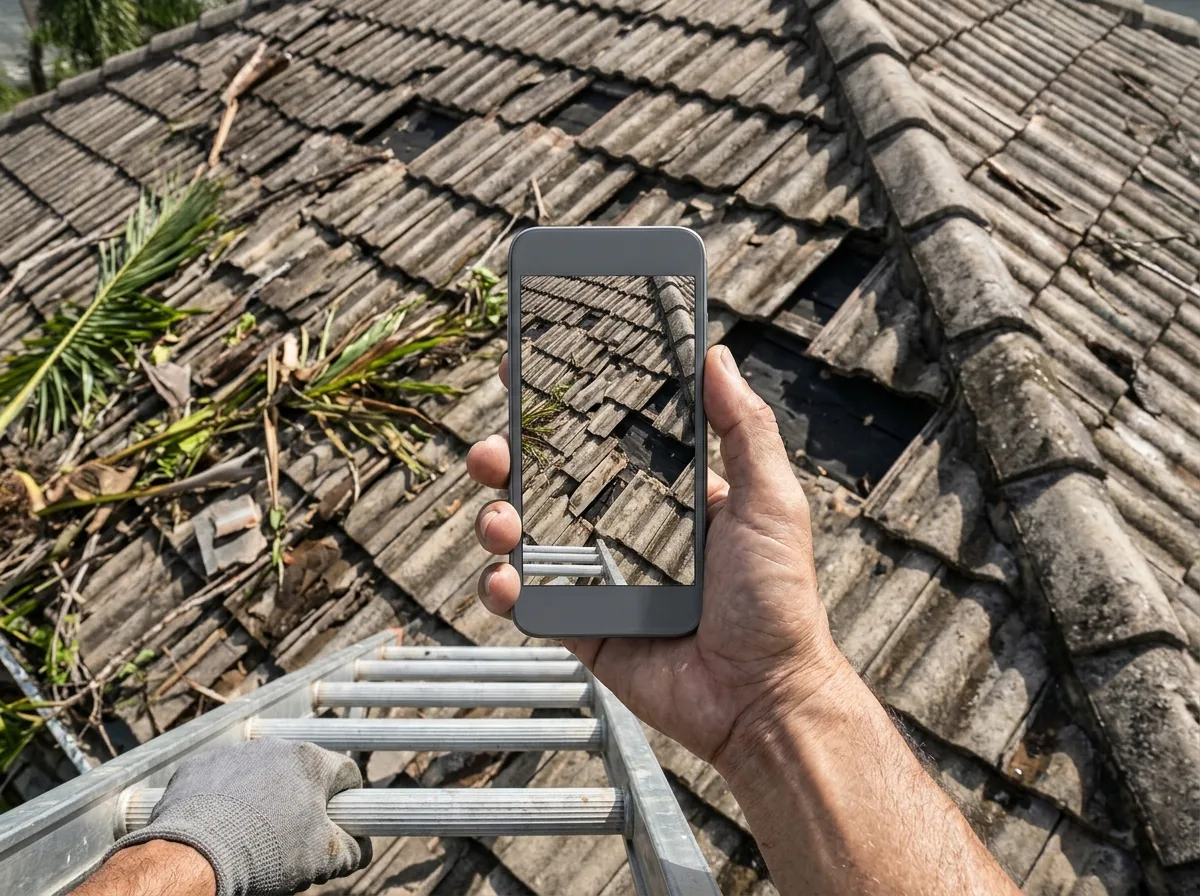
Documenting Damage for an Insurance Claim
Good records make a claim easier to settle. Before anything is repaired:
- Photograph each slope, close-ups of the damage, and stains inside, with dates
- Keep the receipts for the tarp and any emergency work
- Ask for a written estimate that lists the damage slope by slope, with quantities
Florida Statutes section 627.70132 gives you 1 year from the date of loss to give notice of a new or reopened claim, and 18 months for a supplemental claim. For a hurricane, the date of loss is the day it made landfall.
Why Davie homeowners, HOAs and property managers call Davie Roofline
- One request goes to one independent roofer, not a list of five
- Ask for an inspection and a written scope before any deposit
- Ask to see the product approval (NOA) number for every material quoted
- Ask the roofer to name who pulls the Town of Davie permit
- Hold the final payment until Davie's final inspection passes
Florida's Storm-Claim Rules for Roofing Contractors
Florida Statutes section 489.147 sets out what a roofing contractor may and may not do around an insurance claim.
No inducements
A contractor can't offer a rebate, gift, gift card, cash, coupon or a waiver of your deductible in exchange for inspecting your roof or filing a claim.Penalties
Up to $10,000 per violation, and knowingly paying, waiving or rebating a deductible is a third-degree felony.Required notice
Roof contracts must include a notice about these practices. If it's missing, you can void the contract within 10 days of signing.Cancel after a declared emergency
A contract signed within 180 days of a state-of-emergency declaration can be cancelled within 10 days or by the official start date, whichever is first.Itemized estimate
A contractor can't hand you an agreement authorizing claim repairs without a good faith estimate that itemizes services and materials.No coverage advice
A contractor can't interpret your policy coverage unless licensed as a public adjuster.
Two more points from Florida's Department of Financial Services: on policies issued or renewed since January 1, 2023, you can't assign your claim benefits to a contractor, and its storm page advises calling its helpline before signing anything after storm damage.
What a Storm Repair Estimate Should Show
A good roofer will give you a scope you can hand to your insurer without rewriting it. Look for:
- The damage listed by slope and material, with counts or square footage
- Whether the deck under each damaged area was checked
- Permit needs, if the repair is large enough to need one
- A separate line for any tarp or emergency work already done
If water is still coming in, start with our emergency roof repair page. If you aren't sure what the storm did, a post-storm roof inspection is the first step.