
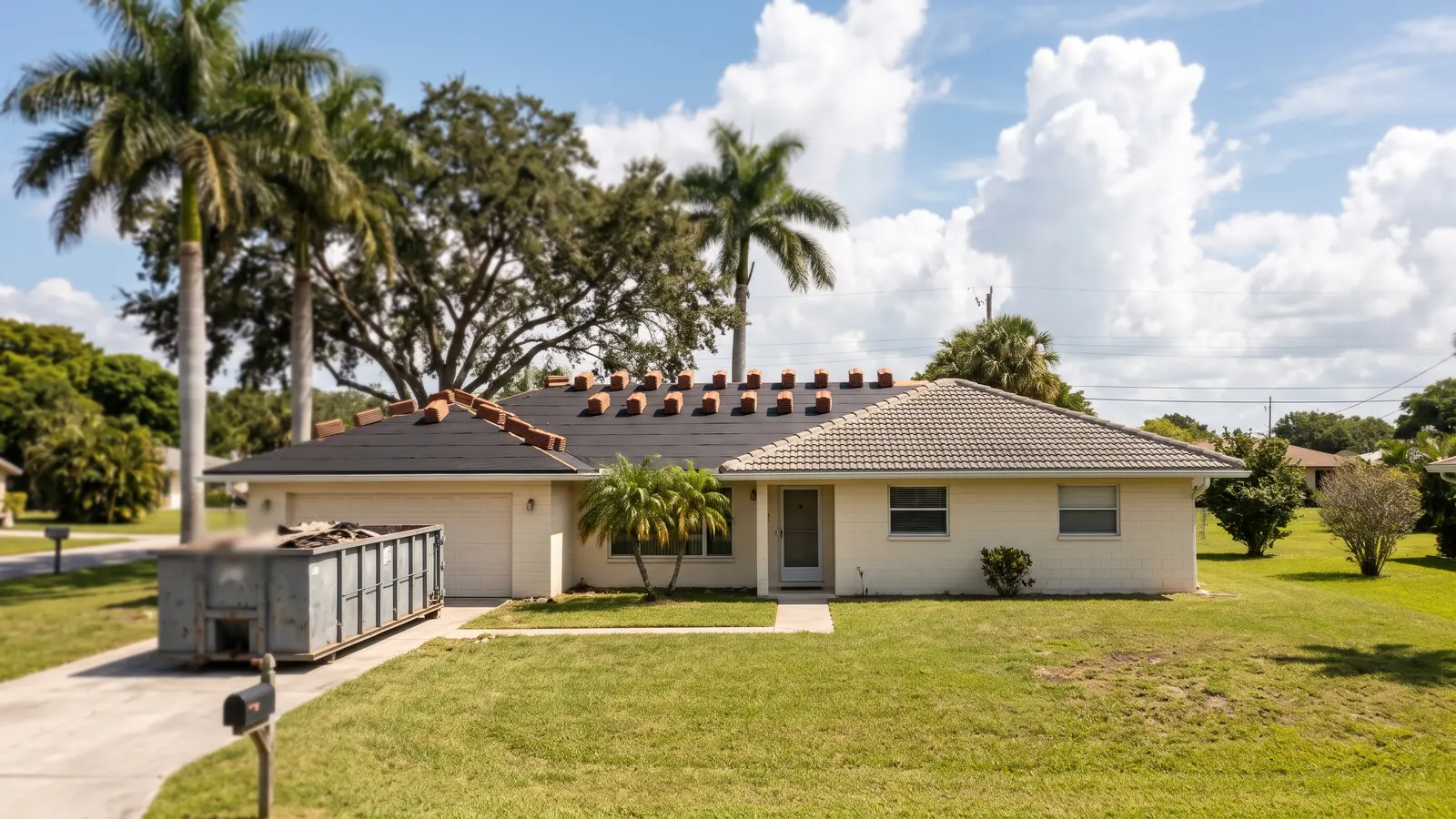
Roof-to-Wall Connection Types on Davie Homes
Florida's wind mitigation form sorts every house into one of these grades by its weakest roof-to-wall connection. Connections at hip and valley jacks within five feet of a roof corner don't count toward that call. Gable-end bracing is the fifth item here: the form doesn't grade it, but the state's retrofit rules single gable ends out.
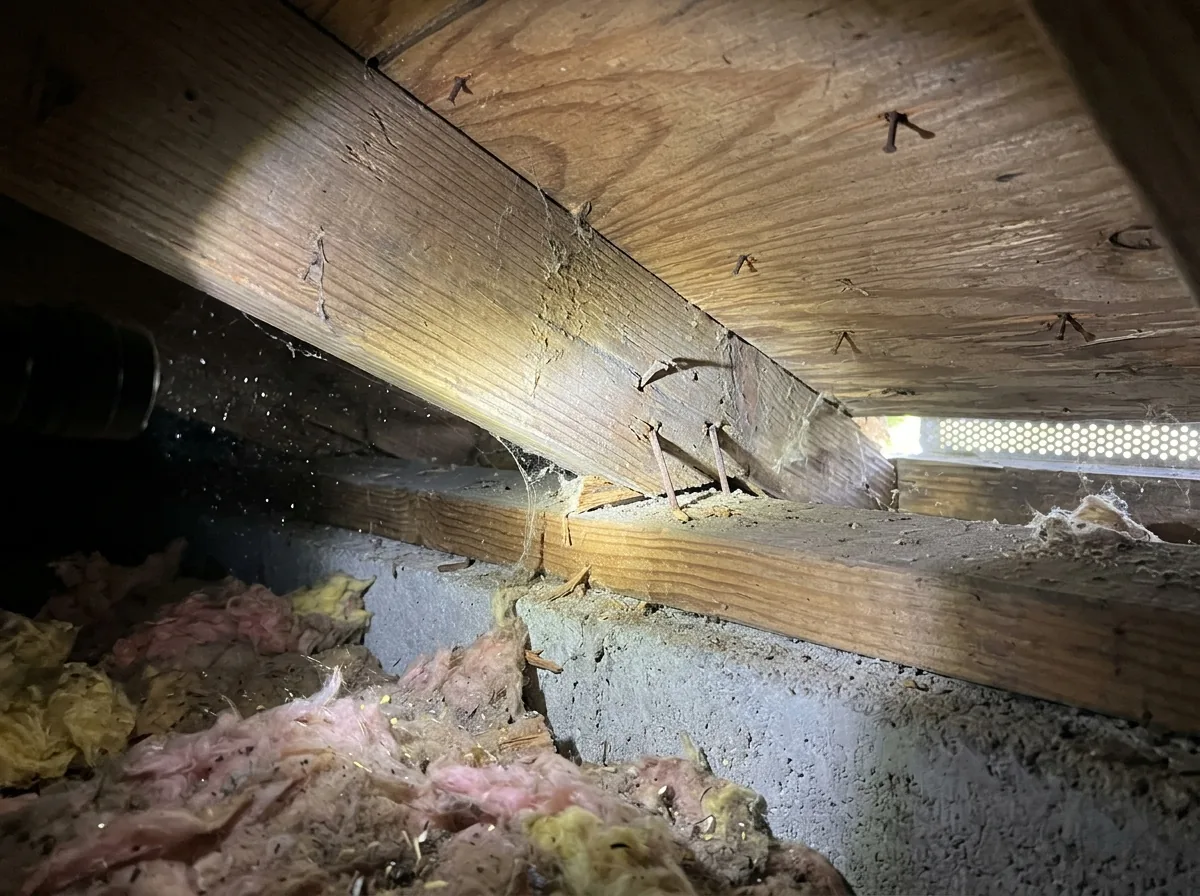
Toenails: The Lowest Grade on the Form
A toenailed truss is held to the wall's top plate by nails driven at an angle through the truss. The form also drops into this grade any metal connector that wasn't installed the way it was meant to be. We couldn't find a count of Davie homes framed with toenails only, so look in the attic or check your last mitigation form instead of guessing from the build year.
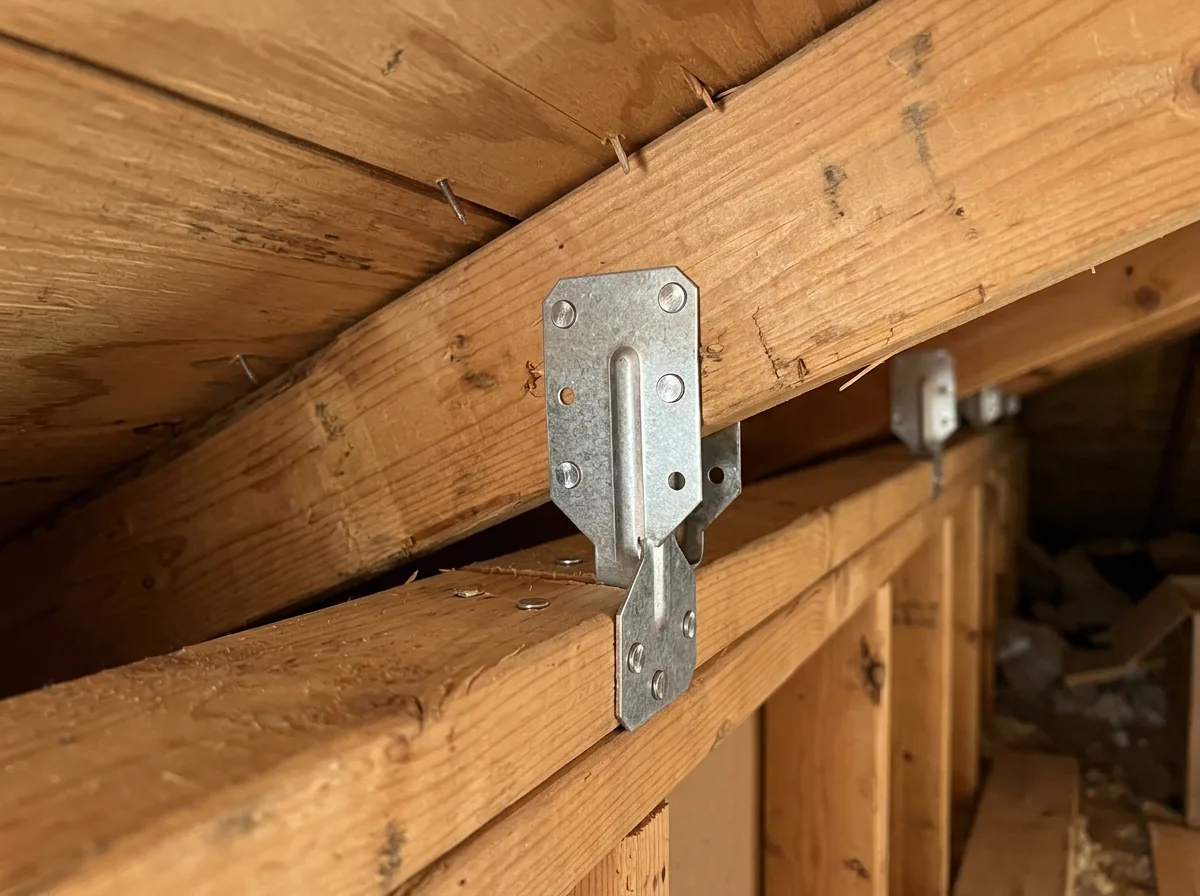
Clips
Clips are metal connectors that don't wrap over the truss. To count, each one needs at least three nails into the truss and has to sit tight to the framing. Purpose-made retrofit clips qualify when rated at 386 lbs of uplift or more and installed to the maker's instructions.
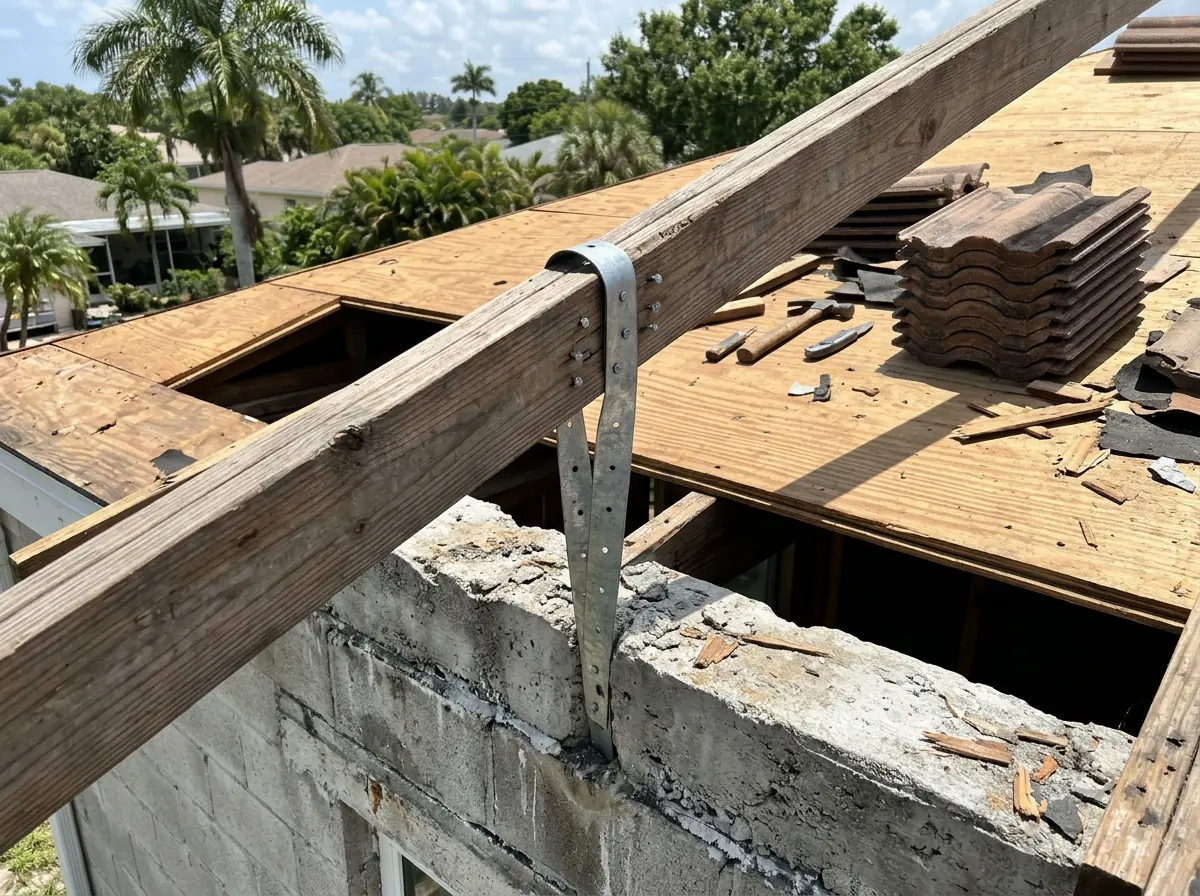
Single Wraps
A single wrap is one strap that goes over the top of the truss, with at least two nails on one side and one on the other. The form's line for purpose-made connectors in this grade is 535 lbs of uplift.
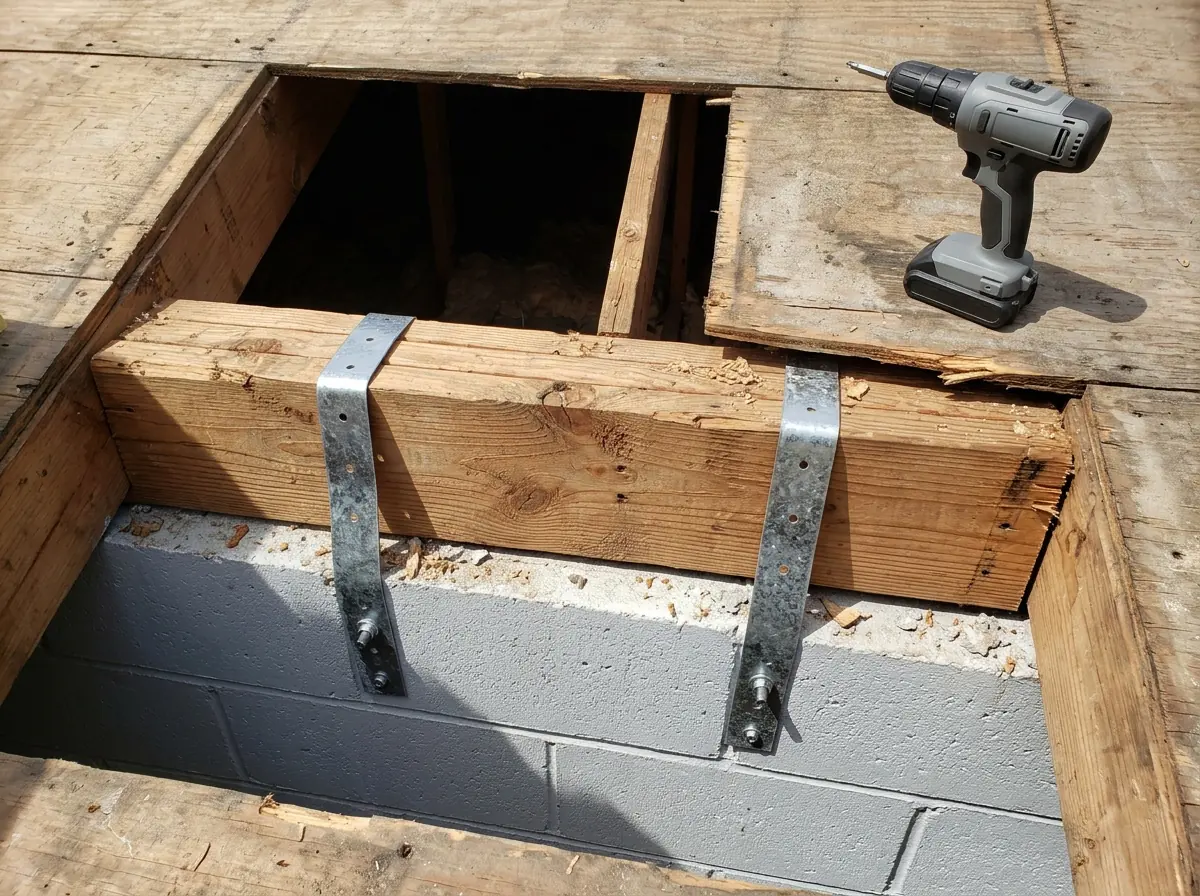
Double Wraps
Double wraps use two straps, one on each side of the truss, each wrapping over the top. A single wrapping strap with three nails on each side also makes the grade. Purpose-made connectors need 891 lbs of uplift capacity. Ask for the connector's model and rated capacity in writing, since that's what an inspector will look for.
Gable-End Bracing and Gable Corners
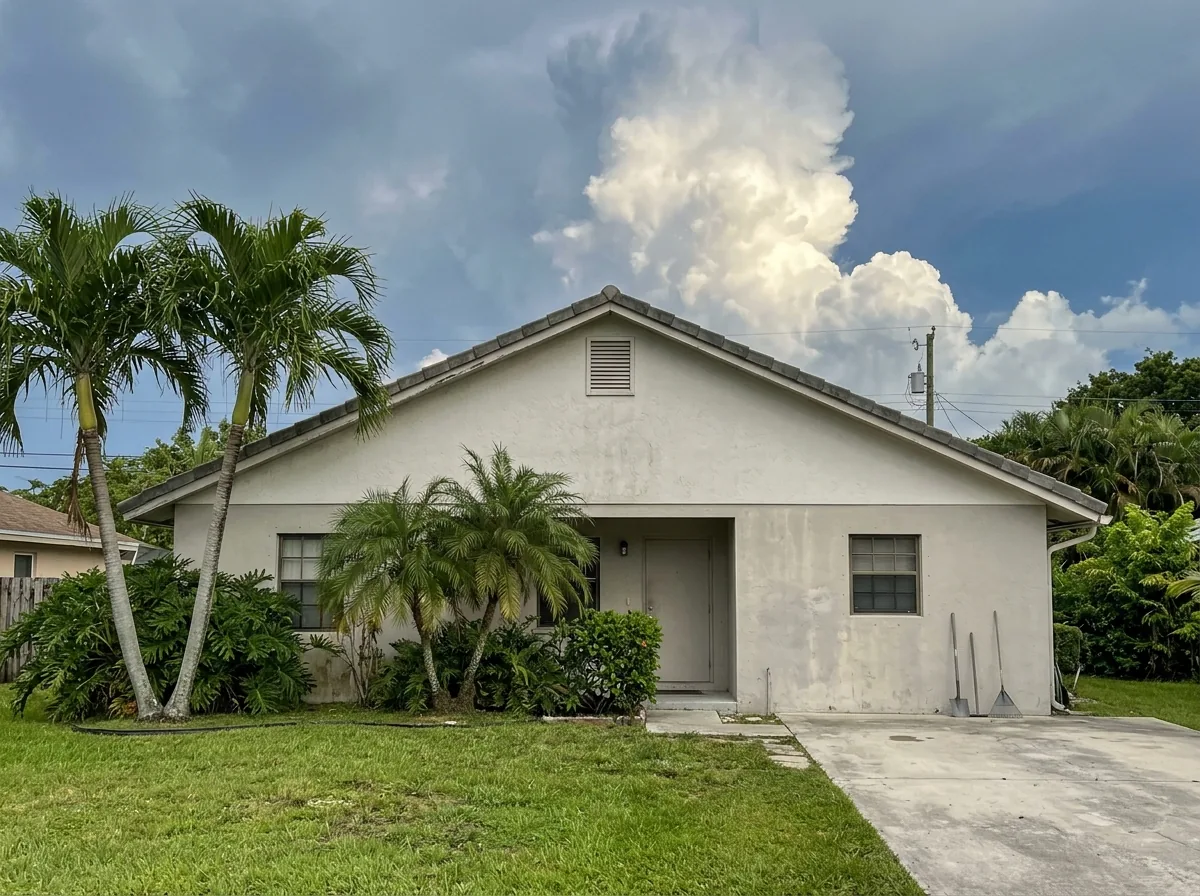
Florida law tells the Building Commission to adopt prescriptive gable-end bracing methods for older houses. The retrofit rules also put gables first. On a house with both hip and gable ends, the gable-end connections get priority unless the hip end is more than 1.5 times wider. The steps for a gable corner:
- Check every exposed rafter or truss within 6 feet of each gable corner.
- Where a strap is missing or has fewer than four fasteners on each end, add an approved connector rated for at least 500 lbs of uplift.
- On a block wall, the connector can go straight into the masonry with screws embedded at least 2-1/2 inches when the maker gives no other depth.
Why Davie homeowners, HOAs and property managers call Davie Roofline
- One request goes to one independent roofer, not a list of five
- Ask for an inspection and a written scope before any deposit
- Ask to see the product approval (NOA) number for every material quoted
- Ask the roofer to name who pulls the Town of Davie permit
- Hold the final payment until Davie's final inspection passes
When Florida Code Requires Straps on a Davie Re-Roof
The Florida Building Code, Existing Building section 706.8 adds a strap upgrade to some re-roofs. It applies when the old covering comes off a home with a wood deck that's in the wind-borne debris region. That region covers any area with a design wind speed of 140 mph or more, and Broward's code figure for Risk Category II buildings is 170 mph. The home also has to be insured at $300,000 or more (or carry a just value at that level if uninsured). Then:
- The roof-to-wall connections have to be improved, but not past a 15% increase in the cost of the re-roof.
- No retrofit is required unless the gable ends or all corners can be done within that 15%.
- Homes built when the code already required roof-to-wall connections are exempt, shown by code adoption and permit dates.
Davie's roofing permit checklist asks single-family re-roofs for a Hurricane Mitigation Retrofit form citing F.S. 553.844 and FBCE 706.7, so expect the question to come up in your permit file. The full permit and inspection sequence is on the roof replacement page.
Getting Straps Installed: Access and Paperwork
The code leaves the access route open: under the eave, from above through the roof deck, or from inside the house. If deck panels come off to reach the trusses, the removed pieces can't go back; new sheathing has to be fastened as new work.
Before you sign, ask:
- Which connector, how many per truss, and its rated uplift in pounds?
- Will the roofer photograph each connection for your files and for the next inspector?
- Is the scope engineered, or done to the code's prescriptive method?
Grant money and the mitigation form both run through the My Safe Florida Home roof upgrades page, which covers eligibility and who may sign the form.