
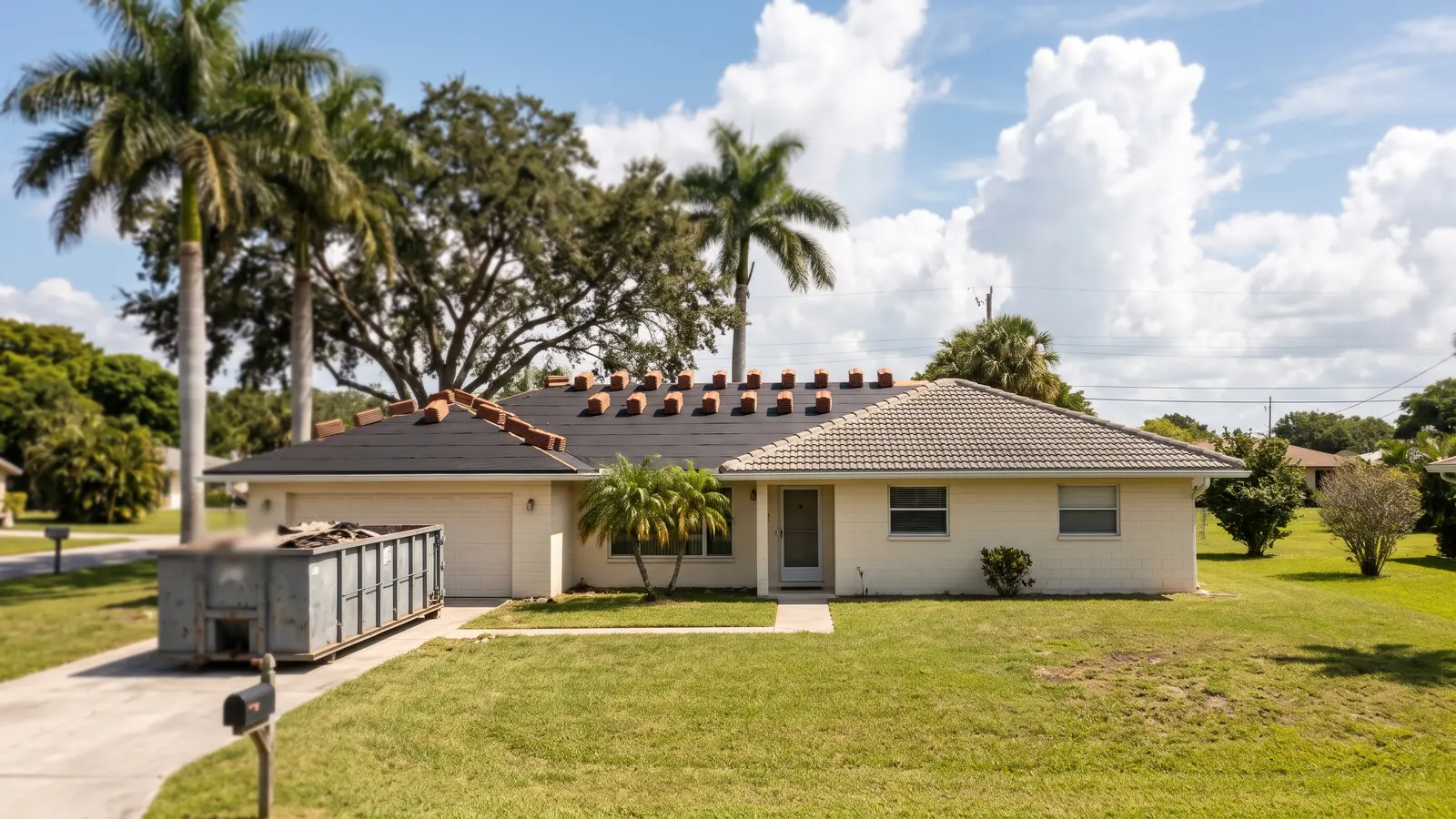
Emergency Roof Work After a Davie Storm
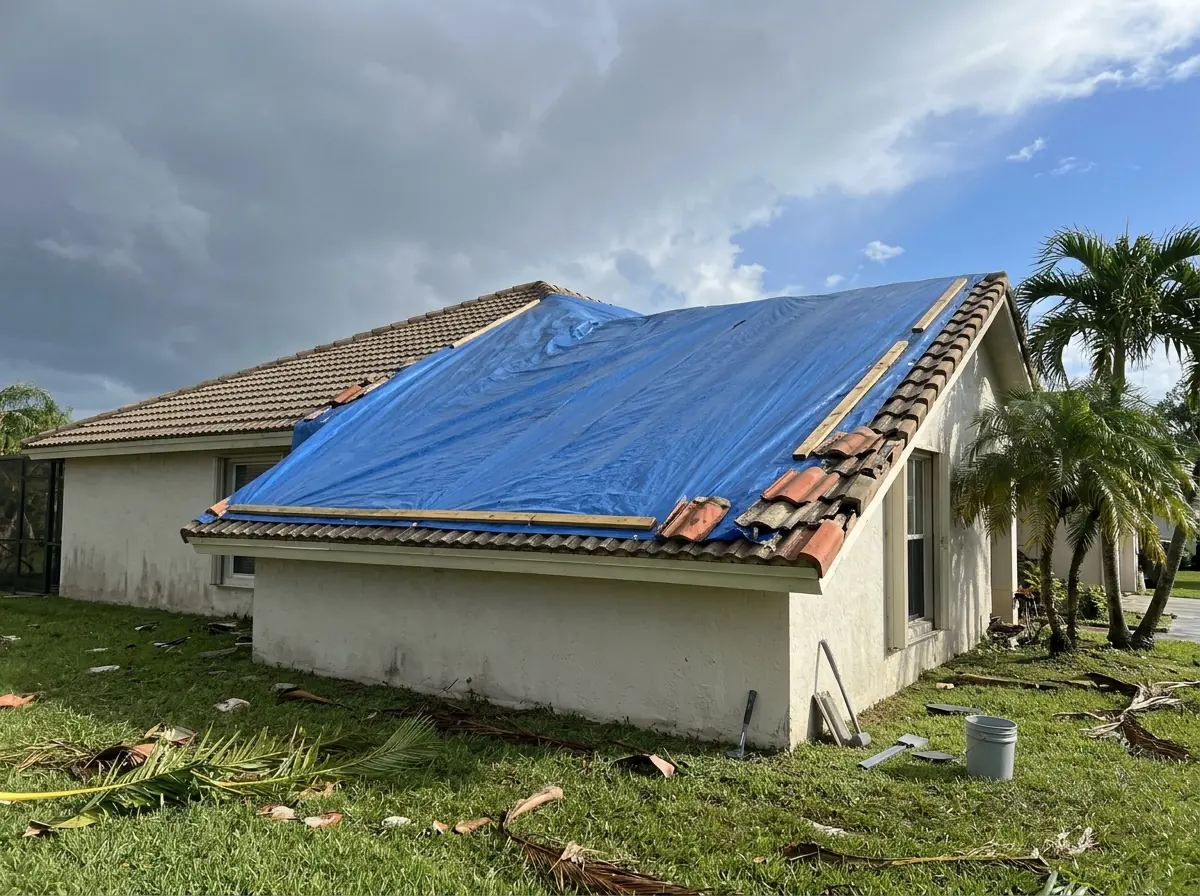
Tarping a Damaged Roof
A tarp is the fastest way to stop water through a hole or a stripped section. HomeGuide's tarp guide lists the extra supplies: lumber strips, screws or sandbags to hold the tarp down over the damaged area.
- Standard installation: $0.70 to $2.00 per square foot
- After-hours installation: $1.00 to $2.80 per square foot
- A call-out fee of $100 to $200 may be added outside business hours
- Tarp material alone: $0.10 to $0.40 per square foot
HomeGuide also notes that some roofers tarp for free when they get the permanent repair. If that's the offer, read the paperwork before signing: see the contract rules on our storm damage roof repair page.
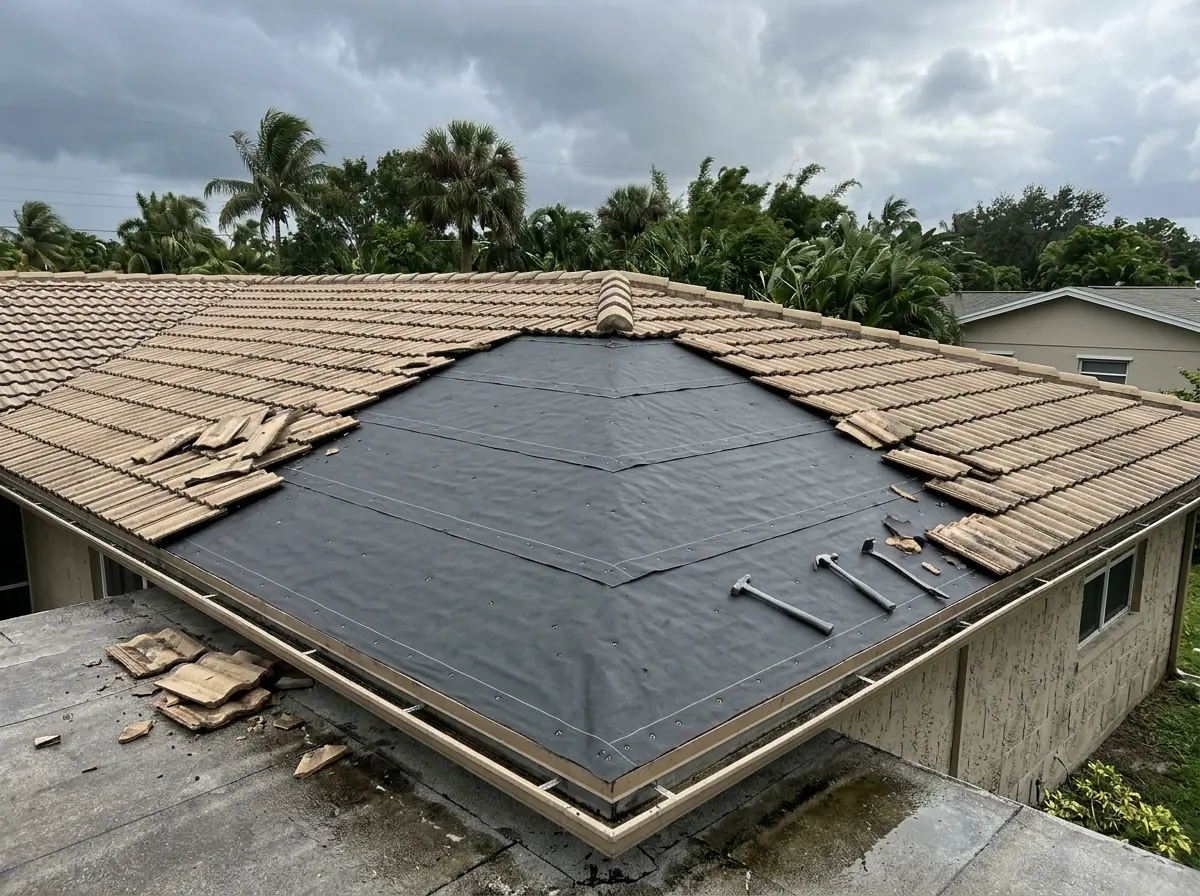
Temporary Dry-In Membrane
Where wind has stripped tile or shingles down to the underlayment or deck, a roofer may lay a membrane over the area instead of a tarp. Ask whether the layer is temporary or meant to stay as part of the finished roof. If it's staying, it counts as permanent roofing, so a permit and the Town's inspections come first; our roof replacement page sets out that inspection order.
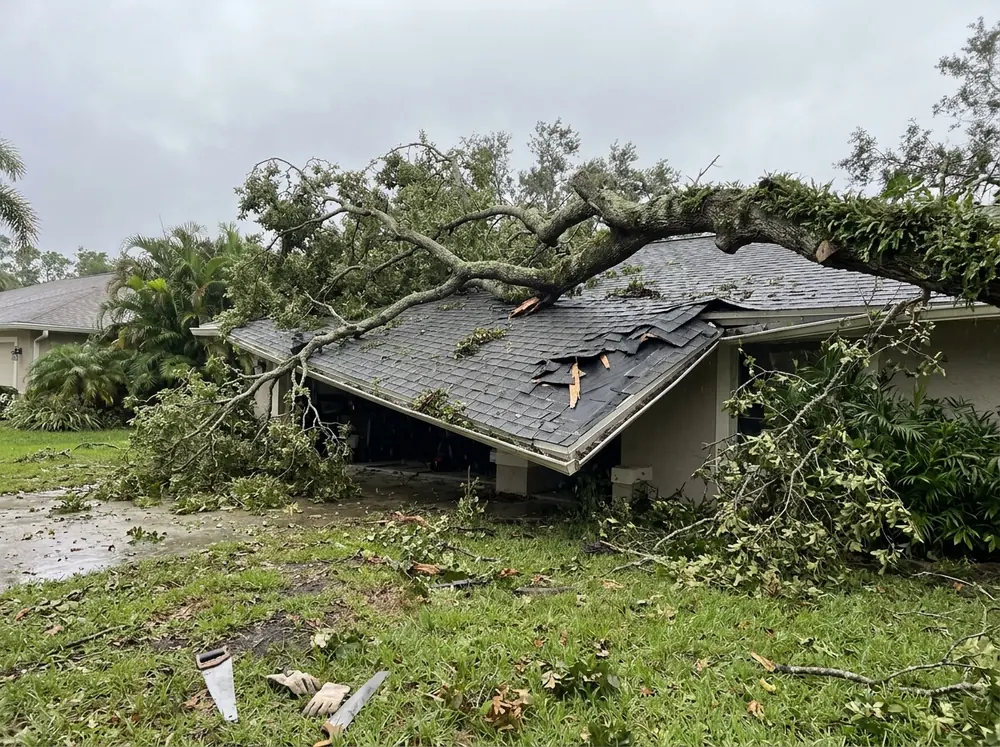
Tree or Limb on the Roof
A limb on the roof is tree work first and roof work second. The limb has to come off before anyone can tarp, and HomeGuide's tarp guide lists tree removal at $400 to $1,200 on average on top of the tarp. If a limb has punched through the deck, keep everyone out of the rooms beneath it until someone has looked at the framing. Photograph it in place before it's cut.
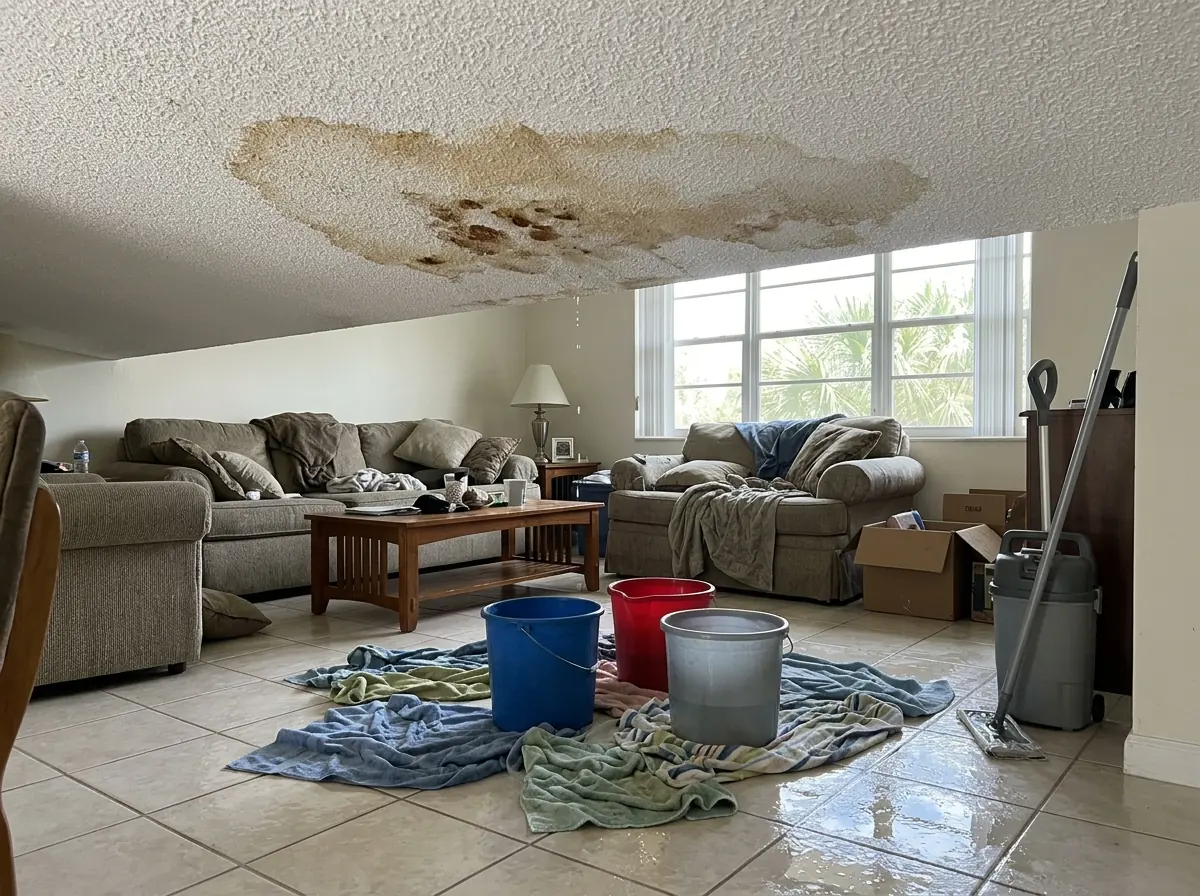
Interior Water Steps While You Wait
What you do inside in the first day matters as much as the tarp.
- Shut off power to any circuit where water is near light fixtures or outlets.
- Catch drips and move furniture, rugs and electronics out of the wet area.
- Photograph every stain and wet item before cleanup, with the date.
- Start drying right away: the EPA says wet materials should be dried within 24 to 48 hours to prevent mold.
- Before signing anything with a contractor, Florida's Department of Financial Services suggests calling its Insurance Consumer Helpline at 1-877-693-5236.
Why Davie homeowners, HOAs and property managers call Davie Roofline
- One request goes to one independent roofer, not a list of five
- Ask for an inspection and a written scope before any deposit
- Ask to see the product approval (NOA) number for every material quoted
- Ask the roofer to name who pulls the Town of Davie permit
- Hold the final payment until Davie's final inspection passes
Hurricane Season and When to Book Roof Work
Storm season in the Atlantic opens on June 1 and closes on November 30. The National Weather Service's report on Hurricane Wilma (October 2005) places the eye over most of Broward County and says structural damage, roof damage among it, was heaviest in Broward and Palm Beach counties. Hurricane Irma in 2017 brought gusts of 80 to 100 mph across most of the county.
A few rules of thumb follow from that:
Book repairs that aren't urgent before June 1
HomeGuide's leak guide notes repair prices rise where storms create demand at certain times of year.Save a roofer's number before a storm is named
It's one less call to make when the power is out.Know whether your roof is due for an inspection
A yearly look before the season starts is covered on our roof inspection page.
After the Tarp: Moving to the Permanent Repair
An emergency visit should end with a written estimate for the real repair. Ask for:
- Photos of every damaged area, taken before the tarp went on
- A scope that separates the emergency charge from the repair quote
- The date by which the tarp should come off
If the damage came from a named storm and you plan to file a claim, Florida's notice deadline and the rules contractors must follow are on our storm damage roof repair page. For leaks with no storm behind them, see roof leak repair.